
If your school or education foundation has reached out to alumni once or twice a year and wondered why the response was underwhelming, the answer is probably not your message. It is your rhythm.
Inconsistent alumni outreach is one of the most common reasons K12 schools fail to build lasting alumni engagement. One big campaign in the fall, a giving push in the spring, and then silence for months. Alumni do not connect with an institution that only shows up when it needs something.
The schools and education foundations that see real, sustained results from their alumni engagement efforts are not the ones with the biggest budgets or the flashiest events. They are the ones that show up consistently, month after month, with communications that feel personal, relevant, and worth reading.
This post breaks down how to build that kind of communication rhythm, one that your alumni actually respond to, and one that your team can realistically maintain.
Why Consistent Alumni Communication Matters More Than Big Campaigns
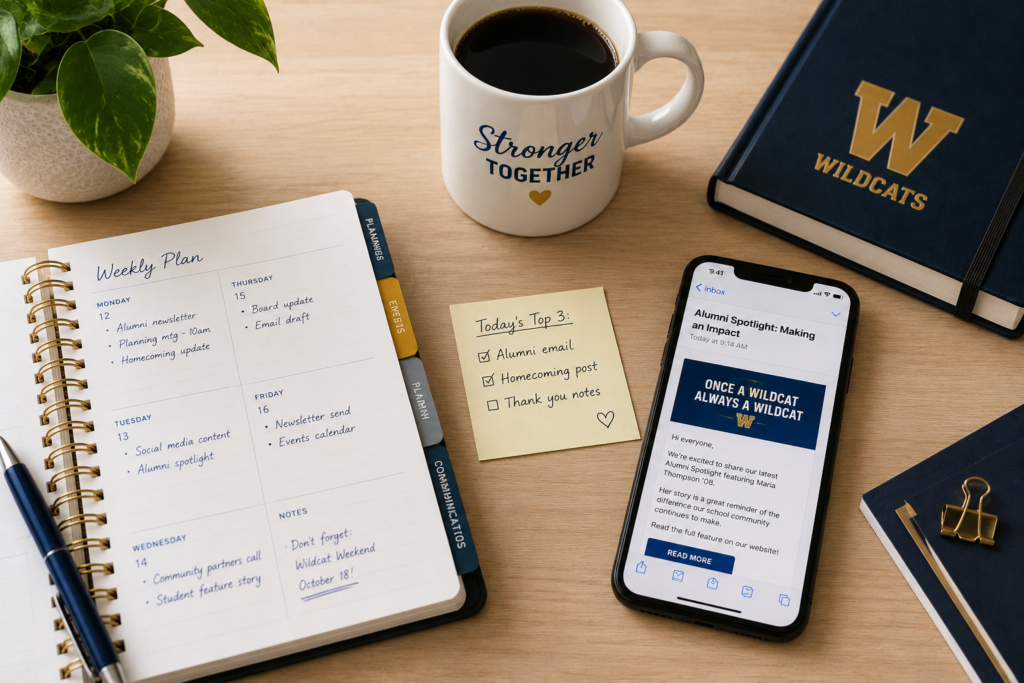
Alumni engagement is not a single event. It is a relationship, and like any relationship, it requires regular, meaningful contact to stay warm.
Think about your own alumni community. These are people who spent some of the most formative years of their lives at your school. The memories are there. The connection is there. But if no one has reached out in five years, that connection goes cold. When you finally do reach out, it feels transactional instead of relational.
Research from the National Center for Education Statistics consistently shows that alumni are among the strongest predictor groups for community investment in schools, but only when that sense of belonging is actively maintained. Alumni who feel connected are more likely to volunteer, mentor current students, attend alumni events, and contribute financially.
The good news: alumni want to be engaged. At Alumni Nations, we sit on the largest K12 alumni insights database in the country, and one thing we hear over and over is that alumni are not disinterested. They simply have not been asked, or they have not been asked in a way that felt meaningful.
A consistent alumni engagement strategy solves this. It keeps your institution in the conversation, builds trust over time, and turns passive graduates into an active alumni community that champions your school.
5 Elements of an Alumni Engagement Communication Rhythm That Actually Works
1. Start With a Communication Calendar, Not a One-Off Campaign
The single biggest shift you can make in your alumni outreach approach is to stop thinking in campaigns and start thinking in calendars.
A campaign has a start date and an end date. A communication calendar has a rhythm. It maps out every touchpoint across the year, from monthly newsletters to seasonal check-ins, alumni events, and giving opportunities, so that no month goes dark.
A strong alumni engagement calendar typically includes:
- Monthly newsletters that share school news, alumni achievements, and student spotlights
- Seasonal touchpoints tied to homecoming, graduation season, or the start of a new school year
- Alumni events that create in-person or virtual reasons to reconnect
- Giving opportunities framed around specific student impact, not just financial goals
- Milestone recognitions like class reunion years, notable alumni accomplishments, and anniversary moments
When you plan all of this in advance, your team is not scrambling each month to figure out what to send. The communication rhythm runs, and alumni begin to expect and look forward to hearing from you.
2. Segment Your Alumni Community for More Relevant Outreach
Not all alumni are in the same stage of life, and not all alumni want the same thing from your institution. Recent graduates care about career guidance and alumni networks. Young alumni who are parents may care deeply about the school their kids are now attending. Established community leaders and business owners want to know how their involvement creates real impact.
Effective alumni engagement means sending the right message to the right group. That requires segmentation.
At minimum, most K12 education foundations should segment their alumni outreach by:
- Graduation era (recent graduates vs. alumni from 10, 20, or 30+ years ago)
- Level of past engagement (alumni who have already given or volunteered vs. those who have never responded)
- Geography (local alumni who can attend in-person alumni events vs. those who live out of state)
- Interests (alumni who were athletes, musicians, student government leaders, etc.)
When alumni preferences are reflected in the messages they receive, engagement rates go up. An alumna who ran cross country does not want a generic email. She wants to hear that the track team just won state and that the school is building a new facility. That is what makes her feel like she still belongs.
Alumni surveys are a simple, powerful tool for gathering this kind of information. A short annual survey asking alumni about their interests, preferred communication channels, and alumni involvement goals can dramatically improve the quality of your outreach.
3. Anchor Your Communications in Nostalgia and Emotional Connection

Alumni engagement should be dripping with nostalgia. That is not a marketing cliche. It is a psychological truth about how alumni relationships work.
The alumni community connected to a school is not connected to an institution in the abstract. They are connected to the specific memory of Friday night football games, the teacher who changed their life, the hallway where they met their best friend. Your alumni communications need to tap into that.
This means:
- Using real photos from the school (not generic stock images)
- Referencing specific traditions, mascots, and school culture
- Telling stories about current students that echo the experiences alumni had
- Featuring fellow alumni who have gone on to do remarkable things
- Celebrating alumni achievements in a way that honors the school that helped shape them
When a graduate reads a communication that makes them feel something, the alumni relationship deepens. That emotional resonance is what turns a passive graduate into an engaged alumnus who shows up, gives back, and brings others along with them.
This is also why email subject lines matter enormously. “Class of 1998: We want to hear from you” will outperform “Alumni Newsletter Q3” every single time. Speak to the alumni, not at them.
4. Keep Alumni Connected Between Major Events
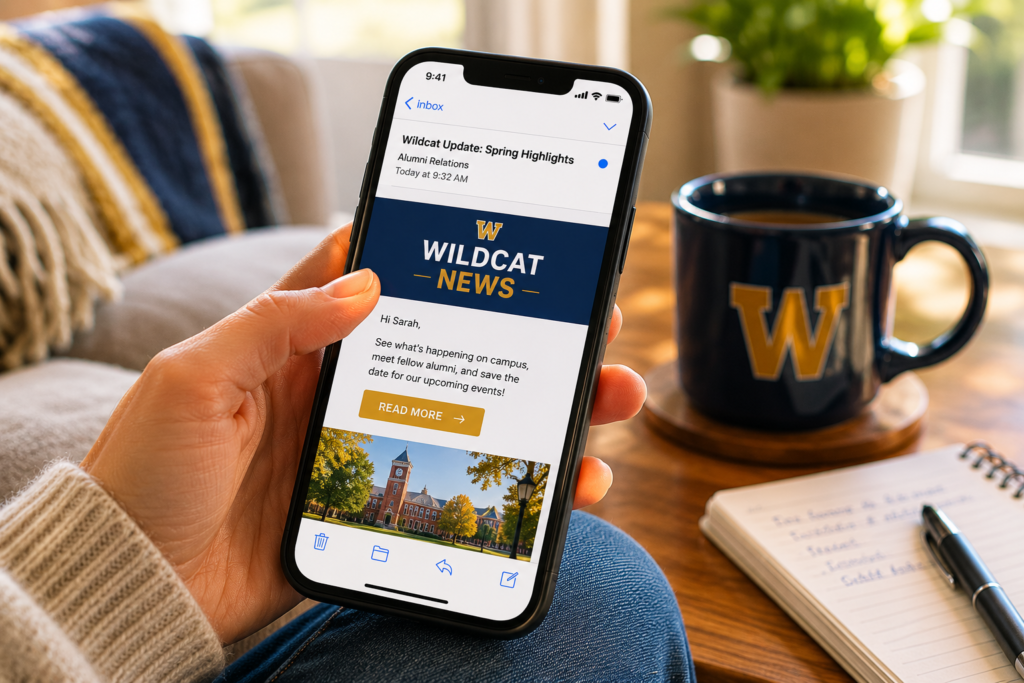
Homecoming and reunions are important. But they cannot carry an entire year of alumni engagement. The alumni who show up at reunions are usually already engaged. The work happens in the months between.
Keeping alumni connected between major events requires low-lift, high-frequency touchpoints that add value without asking for anything in return. Think of it as filling the relationship bank before you make a withdrawal.
Some effective between-event alumni engagement ideas:
- Monthly alumni spotlights featuring a graduate doing interesting work in their community or career
- Student impact updates showing alumni how their contributions are directly helping current students
- Career guidance opportunities inviting alumni to participate in career fairs, mentoring sessions, or classroom visits
- Milestone shoutouts acknowledging alumni on graduation anniversaries, class reunion years, or professional achievements
- Engagement ideas around school events like sending alumni a photo of the current homecoming court or a clip of the spring musical
The goal is to make alumni feel like they are still part of the school community, not just former attendees. When the institution stays present in their lives in small, meaningful ways, asking for their involvement or their support later feels natural, not forced.
This is also where an alumni engagement platform earns its keep. Without the right tools, maintaining this level of consistent outreach across a large alumni network is nearly impossible for a small staff.
5. Build a Repeatable System, Not a Recurring To-Do
The biggest reason alumni communication falls apart at K12 schools is not a lack of intention. It is a lack of infrastructure. The coordinator managing alumni outreach is also managing five other responsibilities. When things get busy, alumni communication gets pushed.
That is why effective alumni engagement efforts must be systematized, not just scheduled.
What does a system look like in practice?
- Templates that reduce the time it takes to put together a newsletter or event announcement from hours to minutes
- Auto-responses and drip sequences that trigger when a new alum joins the directory or a lapsed alum re-engages
- An alumni association structure that distributes the relationship-building work across a volunteer network of engaged alumni
- A CRM or alumni database with dynamic profiles that track alumni interactions, giving history, and engagement preferences
- Analytics and alumni engagement metrics so you can see what is working and improve over time
At Alumni Nations, we act as an extension of your staff. We bring the technology, the strategy, and the managed support to help education foundations build this kind of sustainable infrastructure. Our clients are not running alumni programs out of spreadsheets and goodwill. They have systems that work even when the team is stretched thin.
This is what separates schools that see growing alumni participation year over year from those that stay stuck in the campaign-and-wait cycle.
Putting It All Together: Your Alumni Engagement Rhythm
Building a consistent alumni communication rhythm is not about sending more emails. It is about showing up reliably, speaking to what alumni actually care about, and building a system that keeps working even when your team is busy.
One of the most powerful examples of alumni engagement in action is Give-Education Day, Alumni Nations’ annual 24-hour online giving event that rallies K12 schools and their alumni communities around a shared celebration of education.
The alumni community around your school is ready to be engaged. They remember where they came from. They care about what happens to the students who are walking those halls right now. They just need someone to ask them, consistently and meaningfully.
At Alumni Nations, we help K12 schools and education foundations do exactly that. Our platform combines alumni finding tools, communication systems, mentoring pathways, and giving campaigns into one complete solution, built specifically for K12. We do not just hand you software and wish you luck. We work alongside your team as a true partner in alumni engagement programs, from strategy to execution.
Explore more alumni engagement ideas and resources at the National Alumni Institute, and join K12 institutions across the country making alumni engagement a sustainable, year-round priority.
Ready to build a communication rhythm your alumni will actually respond to?
Schedule a free demo with Alumni Nations today.
Frequently Asked Questions
Why does consistent alumni communication matter more than occasional large campaigns?
Relationships require regular contact to stay warm. A large campaign once or twice a year signals to alumni that the school only reaches out when it needs something. Consistent monthly communication, even when it is brief, builds trust and keeps alumni emotionally connected to the institution. That connection is what drives long-term alumni involvement, including mentoring current students, participating in alumni events, and contributing to the school’s mission.
How often should K12 schools send alumni outreach emails or newsletters?
Monthly is the minimum. Most alumni engagement best practices suggest at least one substantive communication per month, supplemented by event-specific outreach around homecoming, reunions, and the school year. For highly engaged segments, bi-weekly touchpoints can work well. The key is consistency over frequency. A predictable monthly newsletter outperforms an erratic burst of emails followed by months of silence.
What should a monthly alumni engagement strategy calendar include?
A strong monthly calendar includes a newsletter or email update, at least one alumni spotlight or story, and a connection to what is happening at the school right now. Depending on the time of year, you might layer in a giving opportunity, a volunteer or mentoring invitation, or a reminder about an upcoming alumni event. The goal is to have at least one reason to reach out every single month, even in quiet stretches of the school year.
How do I keep alumni communication going between major events like homecoming or reunions?
Focus on value-first content between events. Alumni spotlights, student impact stories, career guidance opportunities, and milestone recognitions all give alumni a reason to open your email without being asked to do anything. These touchpoints fill the relationship bank. When the time comes to invite alumni to a reunion or a giving campaign, the relationship is warm and the ask feels natural.
What tools help K12 schools build a repeatable alumni engagement system?
An all-in-one alumni engagement platform designed specifically for K12 institutions is the foundation. This includes a modern alumni database with dynamic profiles, a communication tool with mass email and segmentation capabilities, analytics to track alumni engagement metrics, and fundraising tools for giving campaigns. Platforms built for higher education or generic nonprofits often require significant customization to fit the K12 context. Alumni Nations is built exclusively for K12 schools and education foundations, which means the tools and the strategy fit from day one.