
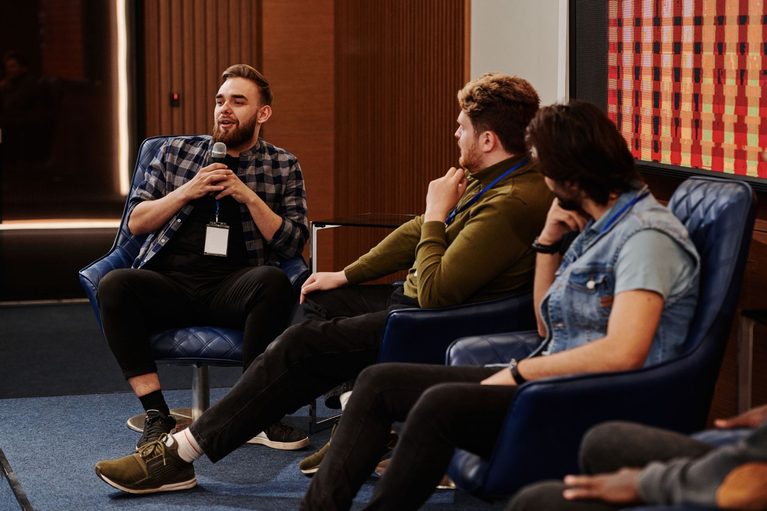
An alumni panel for high school seniors brings recent graduates back to answer questions about life after high school, from college and trade programs to the military and full-time work. The week of Thanksgiving is one of the easiest times to host one. Your newest alumni are home on their first long break, and their first semester is still fresh.
When schools plan alumni events, they often reach for their most accomplished graduates: the surgeon, the business owner, the state legislator. Those alumni speakers matter. For seniors, though, the most useful voice is often someone who sat in the same classroom six months ago.
A first-year graduate remembers exactly what senior year felt like. They can tell your students what surprised them, what they wish they had started sooner, and what turned out to be less scary than it looked. For counselors, education foundation directors, alumni coordinators, and district leaders, that makes an alumni panel one of the simplest ways to support students while reconnecting with your youngest graduates.
Why Host an Alumni Panel for Seniors?
An alumni panel gives seniors something a brochure or a checklist can’t: a candid account from someone a few months ahead of them on the same path. That perspective makes the next step feel real and reachable.
Real-world perspective from someone who just made the jump
Recent graduates are close enough to senior year to remember the worries, and far enough past it to know which ones mattered. When White Plains High School in New York hosted 10 recent graduates in January 2026, juniors and seniors asked about financial aid, professors, dorm living, and managing independence.
Those are questions students rarely bring to an adult in an office. They ask them readily when the person answering graduated last spring.
Inspiration, motivation, and reassurance
Seniors hear plenty of advice. What they hear less often is “I was nervous too, and it worked out.” Seeing a familiar face from the hallway, now living independently or working full time, makes the next step feel possible.
That reassurance can mean the most to first-generation students and to seniors who aren’t sure yet which path fits them.
Practical tips seniors can use right now
The best panels produce advice students can act on this school year. At the White Plains panel, a graduate studying at Rochester Institute of Technology told students, “Scholarships are out there, and you should apply for as many as you can.” That’s a to-do item, not a pep talk.
The first semester after high school is also where many students decide whether to keep going. The National Student Clearinghouse Research Center’s 2026 Persistence and Retention Report findings show that nearly 86% of students who started college in fall 2024 returned for a second semester. Roughly one in seven did not. Graduates who just got through that stretch can tell seniors what helped them stay on track.

Mentorship and networking that lasts past the event
A panel is often the first time a senior meets a graduate who studies, trains, or works in a field they’re curious about. A simple introduction afterward can turn one conversation into an ongoing mentoring relationship.
For your school, alumni mentoring of high school students is also an early, low-pressure way to involve your youngest alumni before they drift away.
Why the Week of Thanksgiving Is the Sweet Spot
The week of Thanksgiving brings together three things that are hard to find at the same time: available alumni, fresh experiences, and seniors who still have time to use what they learn.
Recent grads are home for their first long break
For many first-year college students, Thanksgiving is the first extended trip home since moving out. Graduates who work or train locally often have time off that week as well. You don’t need to fly anyone in. Your panel is already in town.
Their first semester is fresh, so their answers are honest and specific
A graduate three months into college can name the class that surprised them, the roommate situation that took work, and the study habit they had to build fast. By late spring, those details tend to blur into “it was an adjustment.”
The early version is more useful to seniors because it is specific. Recent graduates speaking to high school students in November are still describing what happened, not summarizing it.
It fits the senior-year calendar, before December finals and holiday crowding
Late November falls after many early college application deadlines and before December finals, concerts, and holiday events fill the calendar. Seniors still have most of the school year to act on what they hear, from scholarship applications to trade program visits to conversations with recruiters.
Working around your school’s break schedule
Break schedules vary. Some districts close for the full week, and others close only for the last few days. Pick the option that fits your calendar:
- The last school day before break. Many college students are already home, and seniors are on campus.
- Monday or Tuesday of Thanksgiving week, if your school is in session and nearby colleges are already on break.
- A weekday evening, at the school or a community space, so working graduates and parents can attend.
- A virtual panel, for graduates whose breaks don’t line up or who can’t travel home.
Leaning into the gratitude theme
Thanksgiving gives you a natural frame. Host a senior luncheon or a potluck where panelists and students eat together. Invite seniors to write thank-you notes to the teachers the panelists mention.
Frame the panel as alumni giving back to the school that shaped them. Graduates tend to welcome that invitation because it asks them to share a story, which is an easy yes.
Step-by-Step Guide to Hosting the Panel
Learning how to plan an alumni panel comes down to 10 steps, and most of them happen in the weeks before break. One staff member can coordinate the whole event with help from a counselor and a teacher.
1. Define your goals, outcomes, and audience
Decide what seniors should walk away with. It might be college transition advice, a broader look at paths after graduation, or both.
Then choose your audience: seniors only, seniors and juniors, or an evening session that includes parents. Juniors benefit too, since they’re about to make the same decisions. Write down one or two outcomes you can check afterward, such as how many students say the panel helped them plan a next step.
2. Recruit a diverse panel
Four to six graduates is enough for a 45 to 60 minute session. Aim for a mix that reflects where your graduates actually go:
- A four-year college student
- A community college student
- A trade or technical program student or apprentice
- A graduate serving in the military
- A graduate taking a gap year
- A graduate working full time
That mix is important. The National Student Clearinghouse Research Center’s 2026 High School Benchmarks report found that 51.2% of 2025 graduates from high-poverty high schools enrolled in college the fall after graduation, compared with 73.9% from low-poverty high schools. At many schools, a quarter to half of the senior class won’t be in a college classroom next fall. Those students deserve to see themselves on the panel too.
Reach out to graduates in early fall, before their schedules fill and before they book travel home. Send a short invitation that explains the date, the time commitment, and why you thought of them. A personal note from a favorite teacher or coach often gets a faster yes than a general announcement.
3. Choose a format
Pick the format that fits your space and your students:
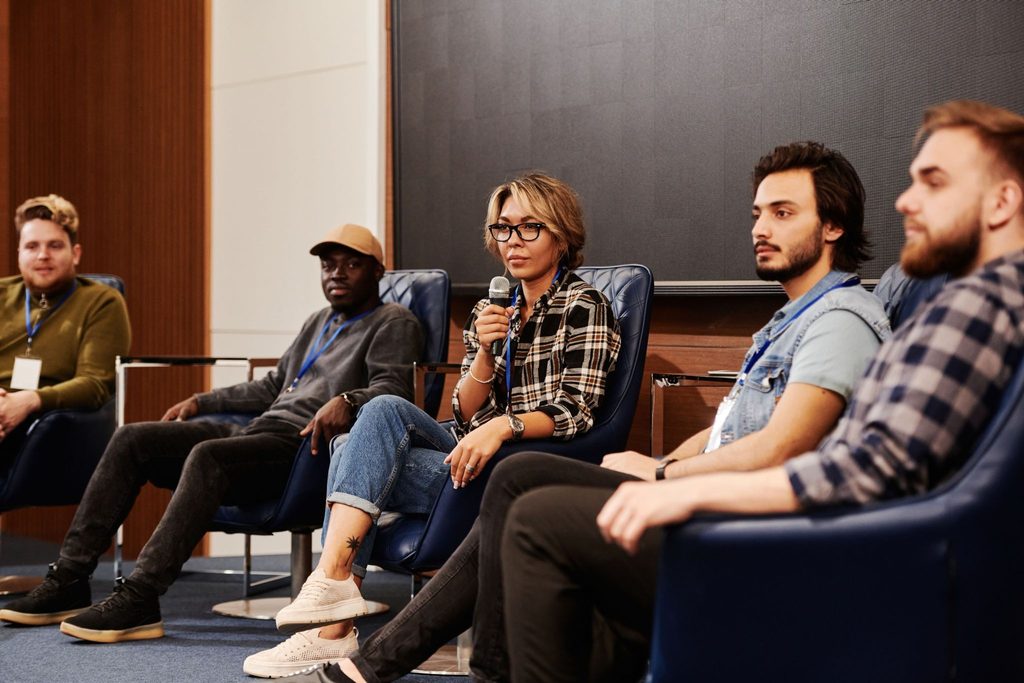
- Moderated Q&A or town hall. A moderator asks prepared questions, then opens the floor. This works well in an auditorium or library and is the classic college panel for high school seniors.
- Small-group breakouts. After a short opening, students rotate among panelists in small groups. Quieter students often find it easier to ask questions this way.
- Lunch-period sessions. Panelists join seniors in the cafeteria or a classroom during lunch. It’s relaxed and easy to schedule.
4. Build your question list, including questions students submit ahead of time
Collect questions from seniors a week or two ahead through a short online form or a box in the counseling office. Anonymous submissions bring out the questions students won’t ask out loud, like how hard classes really are or what happens if they don’t like their school.
Then add a core set of your own:
- What surprised you most about life after high school?
- What do you wish you had done differently senior year?
- How did you choose your path, and would you choose it again?
- How do you manage money, time, and stress now?
- Where did you go for help when you needed it?
- What should seniors do between now and graduation?
5. Brief panelists early, before they head home for break
Once they confirm, send a one-page brief with the agenda, the audience, sample questions, and a reminder to keep stories honest and school-appropriate. Suggest that they write out their responses to each question beforehand just to get their thoughts in order. Ask each panelist for a two-sentence bio the moderator can read aloud.
6. Pick and prepare a moderator
A good moderator keeps the conversation moving, draws out quieter panelists, and makes sure no single panelist does all the talking. A counselor, a well-liked teacher, or a student leader can all do this well.
Share the question list with the moderator in advance. Agree ahead of time on how to redirect a question that goes off track.
7. Promote to students, parents, and alumni
Promote the panel where each group already pays attention. Announce it in class and through the counseling office for students. Use your family newsletter or text system for parents.
Share it with alumni by email and social media so more graduates know the panel exists, even if they can’t attend this year. Alumni Nations’ communications tools help schools send email and social updates to specific class years from one place.
8. Handle logistics
Use a short checklist so nothing slips:
- Room: a library, auditorium, or large classroom that fits the format you chose
- AV: microphones for panelists and the audience, plus a screen if anyone joins virtually
- Visitor check-in: your district’s visitor or volunteer policy, confirmed early in case adult visitors need clearance
- Virtual option: a video link so graduates who can’t come home can still take part
- Refreshments: snacks or a simple lunch, which doubles as a thank-you
9. Run the day smoothly
Bring panelists in 20 to 30 minutes early to meet the moderator and settle in. Open with brief introductions, work through the prepared questions, then leave at least 15 minutes for open Q&A.
Close by thanking panelists by name and inviting students to stay and talk. Some of the best conversations happen after the formal panel ends.
10. Follow up and evaluate
Follow-up turns a single event into a lasting connection:
- Thank-yous: send each panelist a handwritten note or short message within a few days, ideally with a few words from students.
- Student survey: ask two or three quick questions about what helped and what students still want to know.
- Shared notes or a recording: post key takeaways, or a recording with panelist permission, for students who missed it.
- Mentor connections: offer to introduce interested seniors to panelists in fields they’re curious about.
Alumni Nations’ mentoring tools help schools organize those introductions into ongoing alumni mentoring relationships.
Make It an Annual Tradition
An alumni panel gets easier every year you run it. By the second year, you know the format, you have a question list, and you have graduates who already said yes once.
Build an alumni contact list every spring
The best time to recruit next November’s panelists is before they graduate. Each spring, collect seniors’ personal email addresses and phone numbers, not just school accounts that close after graduation. Ask about their plans after high school so you can build a balanced panel later.
Our guide on how to turn new graduates into lifelong alumni covers simple ways to capture that information before graduation day. For older classes, Alumni Nations’ alumni finding services help schools locate graduates and update their contact records.
This year’s seniors become next year’s panelists
Every senior in the audience is a future panelist. Tell them so at the end of the event. Students who remember how helpful the panel was are often quick to say yes when you reach out.
Over time, the panel becomes a tradition graduates look forward to. It also becomes one more reason they stay connected to your school.
Common Mistakes to Avoid
Most alumni panel problems come from a handful of planning shortcuts. Use these two lists as a quick check before the event.
Mistakes to skip
- Inviting only graduates from four-year colleges
- Recruiting panelists the week before the event
- Letting the moderator improvise without a question list
- Filling the whole session so there’s no time for student questions
- Forgetting a virtual option for graduates who can’t travel
- Skipping the thank-you and the follow-up
What to do instead
- Invite graduates from college, trade programs, the military, gap years, and the workforce
- Reach out in early fall, before graduates make holiday plans
- Collect student questions in advance and share them with the moderator
- Save at least 15 minutes for open Q&A
- Offer a video link for remote panelists
- Thank panelists within a few days and update their contact information
Your Newest Alumni Are Your Best Panelists
Your seniors are about to make some of the biggest decisions of their lives. Your newest alumni just made them. An alumni panel the week of Thanksgiving puts those two groups in the same room when it helps most, and it asks for little more than a room, some snacks, and early outreach.
It’s also one of the simplest ways to find, connect, and engage your youngest graduates, and a strong first step for K12 alumni engagement at any school.
Ready to keep your graduates connected long after the panel? Schedule a demo with Alumni Nations to see how K12 schools and education foundations bring alumni panels, mentoring, and outreach together in one program.
Frequently Asked Questions
How many alumni should we invite to our panel?
Four to six panelists works well for a 45 to 60 minute alumni panel. That’s enough to show different paths after high school without leaving each speaker only a few minutes. If more graduates want to help, use them in small-group breakouts or invite them back for a spring session.
What if our school is closed the whole week of Thanksgiving?
Hold the alumni panel on the last school day before break, as an evening event, or virtually during break. If none of those work, the first weeks after winter break are a strong backup, since many college students are still home in early January.
Should we include alumni who didn’t go to college?
Yes. Graduates in trade programs, the military, gap years, and the workforce give many seniors the most relevant view of their own next step. A panel made up only of four-year college students can leave a large share of your senior class feeling left out.
How do we find recent graduates if we don’t have their contact information?
Start with the teachers, coaches, and counselors who stay in touch with former students, and ask current seniors about older siblings and friends. Post a call for panelists on your school’s social media. Going forward, collect personal contact information from seniors each spring so next year’s recruiting starts with a list.
Can we hold an alumni panel for seniors virtually?
Yes. A virtual panel works well for graduates who live far away or can’t travel home. A hybrid format, with some panelists in the room and others on screen, keeps the energy of an in-person event while widening who can take part. Test the audio before students arrive.